Use the same small set of measures
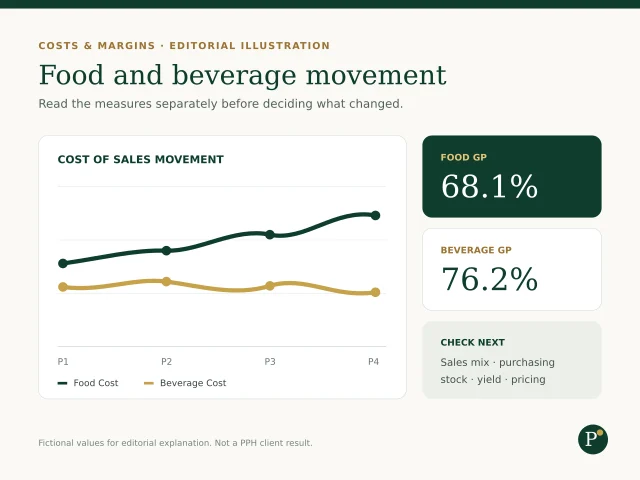
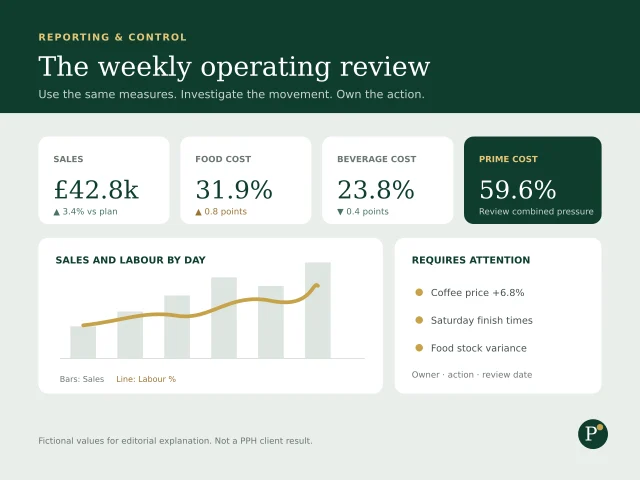
Begin with Sales and sales mix. Then review Food Cost, Beverage Cost and Labour separately, bringing them together through Prime Cost where that measure is used. Add stock, waste or supplier-price movement only when it needs attention.
A consistent trend is more useful than a crowded dashboard that changes every week.
Ask what happened in the operation
A variance needs an explanation that can be checked. Did the mix change? Did a supplier price move? Were extra hours used for an event? Did an invoice or stock count fall into the wrong period? Was there a closure, promotion or service issue?
- Sales: what changed by venue, department or daypart?
- Food Cost and Beverage Cost: which products, prices, yields or losses moved?
- Labour: did hours follow demand and was the intended service delivered?
- Prime Cost: is combined pressure building even if one measure looks acceptable?
- Purchasing and stock: what needs attention before the next service cycle?
Finish with ownership
Keep the action list short. Record what will be checked or changed, who owns it and when the position will be reviewed. Carry unresolved actions into the next meeting instead of starting again from zero.
The value is not the meeting itself. It is the quality and speed of the decisions that follow.
Read why Labour percentage needs operational context