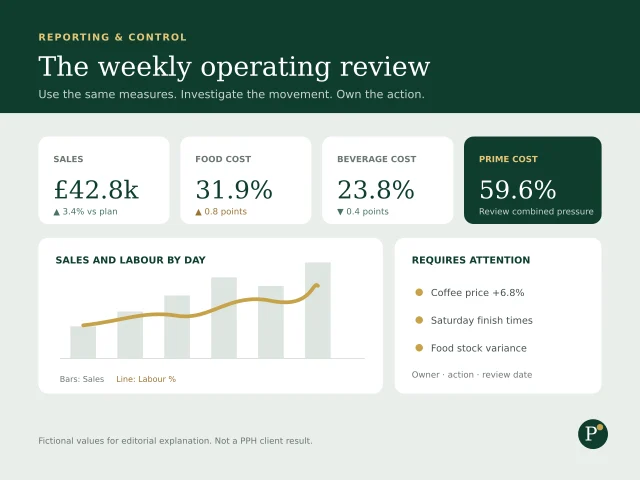
Separate the movement in sales from the movement in Labour
Labour percentage can rise because labour cost increased, because sales fell, or because both moved at different rates. Compare actual hours and cost with the rota and forecast before deciding that the team is too large.
A whole-week percentage can hide a quiet lunch, a well-run busy dinner or preparation work that supported a later service.
Review comparable services
Bookings, occupancy, events, prep, deliveries, cleaning, training and service style all affect the hours required. Sales per labour hour is useful when the periods are genuinely comparable, but it is not a universal target for every pub lunch, hotel breakfast and tasting menu.
- Did start and finish times follow the demand pattern?
- Was the right balance of roles and experience on the shift?
- Which fixed tasks existed before opening and after closing?
- Was the intended service standard delivered?
Change the rota with operational context
If the hours do not follow demand, start with shift shape, role allocation and duplicated work. Sudden cuts made from one percentage can reduce service, increase pressure and create costs elsewhere.
Managers closest to the shift usually know where time is being lost. Give them the information, involve them in the change and check whether it worked operationally as well as financially.