Check the comparison before the operation
Make sure sales and purchasing cover the same period. Check that credit notes and late invoices are in the right place and that opening and closing stock have been treated consistently. A timing difference can look like an operational problem when it is not.
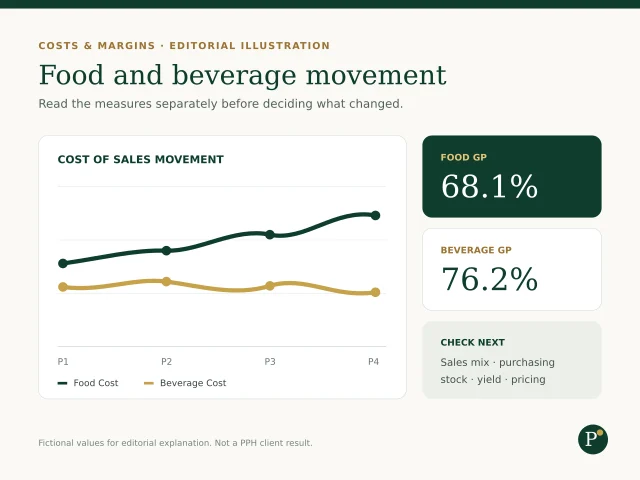
Then split food from beverage. One can be steady while the other moves sharply, and a combined figure can hide that difference.
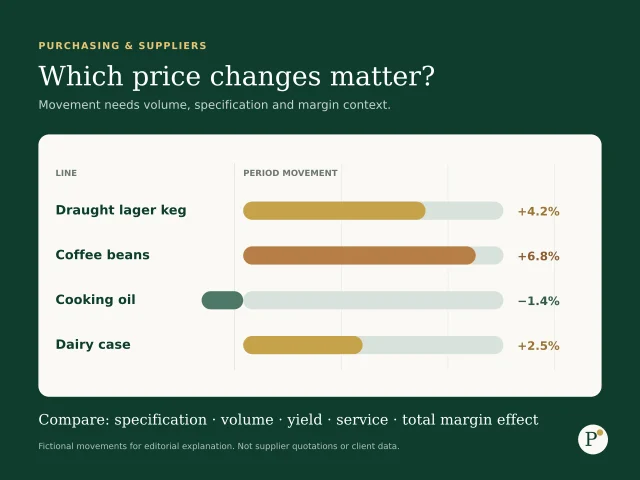
Follow the products with enough volume to matter
Start with sales mix and the high-volume lines. A modest cost movement on a product sold hundreds of times can matter more than a dramatic percentage change on an occasional item.
- Food: supplier price, recipe cost, portion, yield, waste and selling price
- Beverage: drinks mix, purchase price, stock movement, breakage, measures and promotions
- Both: late invoices, credits, transfers, till keys and the period used for comparison
Decide what needs to change, if anything
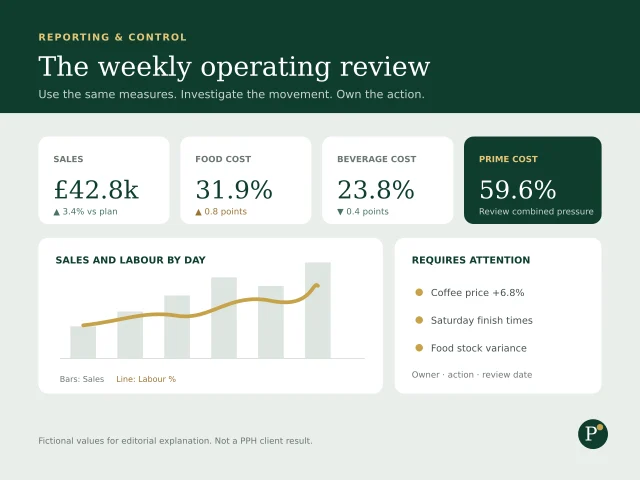
The review should finish with a specific action, an owner and a date to look again. That might be a supplier query, a recipe re-cost, a pour check, a stock correction or a deliberate decision to accept the movement.
Do not cut quality or move suppliers because one headline percentage changed. Use the cause to choose the action.