Check whether it is really like for like
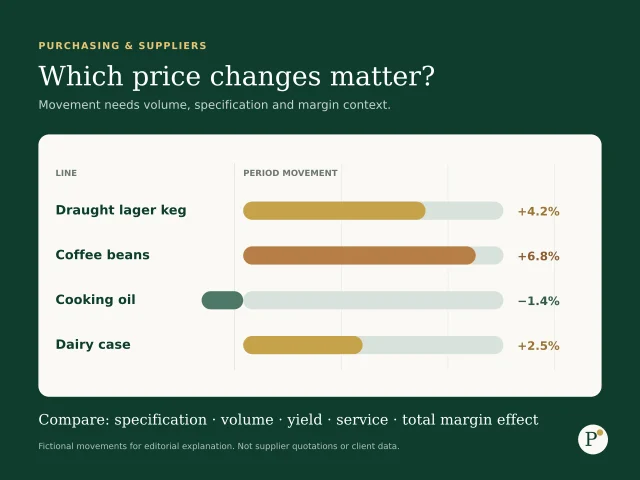
Compare grade, origin, pack size, preparation, usable yield and the rules around substitutions. Two lines with the same broad description can produce different costs once they reach the bar, kitchen or floor.
For drinks, include bottle or keg size, strength, serve size, rebate terms and the role the product plays on the list.
Count the operating cost as well as the purchase price
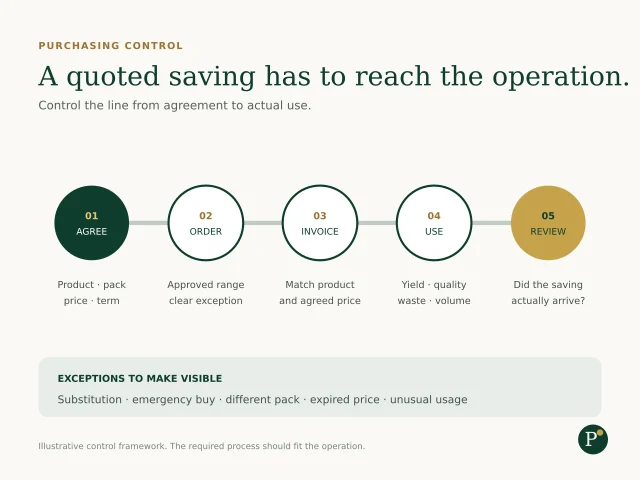
Minimum orders, delivery days, lead times, emergency availability and credit arrangements all have a value. A saving that forces extra stockholding or creates shortages may move cost rather than remove it.
- Quality and consistency across repeated deliveries
- Specification, pack size and usable yield
- Delivery accuracy, credits and problem resolution
- The margin effect at realistic purchase and sales volumes
Record the decision and check the outcome
Ask what caused the increase and whether a different pack, specification or ordering pattern would help. If the business stays with the supplier, record why. If it moves, agree how quality, deliveries and actual savings will be checked.
That short record prevents the same debate being repeated without context.
Read why negotiated savings need purchasing controls